Beauty I’ve Always Missed…

Anthology (The Moody Blues album)

Image via Wikipedia

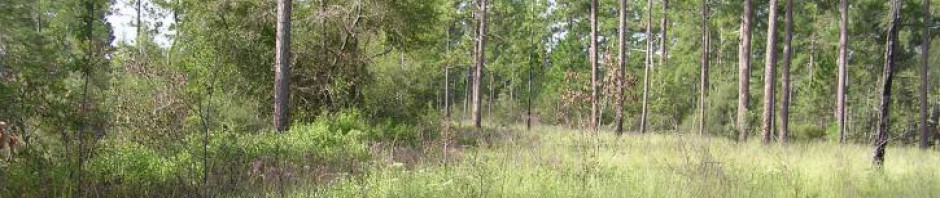
Seems like I’m doing more tweeting than blogging here, snippets of thought rather than information others need.  But anyway, the new look does relate to themes from the trilogy.   “Beauty I’ve always missed, with these eyes before…”   Quoting lyrics from the Moody Blues song “Nights in White Satin.”  The dry grass going to seed juxtaposed with the dew-laden blades of green.  At first glance the grassy hillside doesn’t grab attention.  But look closely and see what you find.

Posted in Uncategorized | Leave a comment

Background image

Themes, images, appearance, the look of the site – I’ve added back the image used in the original header by placing it in the background.  Not sure if I like how this looks, but I’ll leave it like that for now.

Posted in Uncategorized | Leave a comment

Change of Header Image

At the behest of Bill Belew, blog workshop presenter, I have sought and uploaded a new image for the header of this blog (free, non-copyrighted.)  I had to crop the image to fit the header.  I chose to have the droplets centered.  Hope this works.

Posted in Uncategorized | Leave a comment

Outing the Robber Barons

Seal of the United States Department of State....

Image via Wikipedia

Today I heard talk radio’s Barry Lynn interview John Loftus, the author of America’s Nazi Secret, on his “Culture Shocks” program.   I haven’t read the book, nor have I heard of this man Loftus before, so I can’t offer my recommendation of the book , nor vouch for the author’s credibility, but much of what he said was intriguing. 

His main point was that the Robber Baron class of U.S. businessmen were responsible for helping to fund the Nazi war machine.  One small example I remember:   Joseph Kennedy (JFK’s father) bought stock in Nazi manufacturing from Prescott Bush (George W.’s grandfather).  Well-heeled families invested in the House of Saud’s Nazi network and Stalin’s reign of power.  Fascism was a good thing to the Robber Barons as long as it kept their businesses booming. 

A second point was that U.S. State Department officials helped many Nazi criminals escape to the U.S. after the war so the “intelligence” community (working at the behest of the industrialists) could draw on their skills and experience.  An editorial review said the book  “reveals how the U.S. government permitted the illegal entry of Nazis into North America in the years following World War II.” Of course, we’ve all heard this rumor before, but now a thirty-year ban on revealing the truth of it has elapsed, so Loftus is able to publish his full argument, instead of the government-censored story he gave us thirty years ago.

A third point Loftus made during the interview was that the Robber Barons of the U.S. were not motivated by anything as lofty as ideology, dogma, or principles.  They were in it for the money. That’s it.  Whatever brought them the most profit became their operating model.  They knew goods in Germany were being manufactured by slaves (imprisoned Jews and others), but that didn’t bother them as long as the profits poured in.  Doesn’t sound much different from practices of mega-big business today, does it?

Maybe it’s time to dust off the term “Robber Baron” and apply the title wherever it’s appropriate. 

http://en.wikipedia.org/wiki/Robber_baron_(industrialist)

http://dictionary.sensagent.com/robber+baron+(industrialist)/en-en/
Posted in Citizen Corporation, Translight Themes | Tagged , , , | Leave a comment

Three Suggestions to Make Wind Turbines Wildlife Compatible

Brazos Wind Farm in the plains of West Texas

Image via Wikipedia

As research and development of wind farms surges forward, we hear the encouraging news that birds tend to fly around the spinning blades of turbines, rather than trying to fly through them  “even in conditions of low visibility.”  Mostly.  The article I read stated that “potential avian impacts can be minimized by siting turbines away from high-traffic flight paths and adjusting operations during seasonal migrations. “  www.ucsusa.org/windpower 

Still, not all birds and bats will be smart enough to avoid running into the shredders, so here are some suggestions for the Citizen Corporation who is investing in wind farms:   

  1. Coat one blade on each turbine with sunlight-reflecting iridescent material  (like the sparkly owl I hang on the glass door to keep birds from flying into the glass.) 
  2. Add a blinking light to the top of each turbine (actually, if the blades are turning, a steady light might appear to blink – and the light can be powered by the turbine.)
  3. Add super-sonic chirps powered by the turning blades, something that warns off the bats and keen-eared birds on a collision course with the blades, but isn’t so loud that it disturbs the ground-dwellers. 

These measures might run up the production cost of turbines a little, but Citizen Corporation should also think of the PR value!  “Our Turbines Are Wildlife Friendly!”  “Safe-Guarding the Flyways As We Clean Up the Air!”  (We’ll let Citizen Corporation’s slogan people work on that.) 

And what are the Translight themes touched on here?  Clean energy, lowering impact on nature, being concerned about something besides profits… 

Posted in Citizen Corporation, Translight Themes | Tagged , , | Leave a comment

Koala: To Be Or Not To Be, pt 4

There is, of course, another part to the question of the continued existence of koalas.  How can they survive in the wild when their wilderness has disappeared? 

Over 80% of the natural eucalyptus groves in Australia have been cut down.  Most of the remaining eucalyptus grows on private land.   The continued existence of koalas depends on the marsupial’s ability to adapt to a suburban environment.  But one estimate says that every year 4,000 koalas are killed by cars, dogs, and feral cats.  The species is teetering on the edge of that swift slide into extinction, and the biggest threat to koalas is human carelessness.  Sound familiar?  We are such a selfish species.   https://www.savethekoala.com/deborahtabartsdesk.html

Posted in POD Publishing, Translight Themes | Tagged , | Leave a comment

Koala: To Be Or Not To Be, pt 3

Baby koala, captured at Currumbin Wildlife San...

Image via Wikipedia

In the earliest version of Light Thickens, the protagonist succeeds in saving the koala, delivering it to a zoo in the US during the interval between Light Thickens and Vaporous Night.  That version was not meant to be read by the general public, but several months after mailing the manuscript to a story consultant, I read a disturbing newspaper article about a koala caper. 

A teenage boy had broken into the San Diego zoo to kidnap a live koala.  He wanted to give it to his girlfriend because she thought koalas were so cute.  Fortunately, the police were able to track him down a few days later and found the koala, still alive, being kept in the girlfriend’s  bathtub. 

I don’t know if the animal survived without coming down with an illness contracted during the kidnapping. I don’t know what punishment was meted out to the teenagers.  I do know I made up my mind right then to rewrite Light Thickens to emphasize that “ownership” of an exotic animal frequently ends up badly for the animal.  

The message: don’t fuel the poaching of wild animals by buying (or stealing) them.  Leave the wild animals where they belong, in the wild – or in sanctuaries where they are cared for by people who have studied their needs.  If you want a pet, adopt a dog or cat from an animal shelter.  https://www.savethekoala.com/deborahtabartsdesk.html

Posted in POD Publishing, Translight Themes | Tagged , | Leave a comment

Koala: To Be Or Not To Be , pt 2

In Light Thickens a healthy koala joey (weaned but not yet adult) is plucked from its ideal habitat and instantly teleported to a foreign environment full of strange germs.  Within fifteen minutes it is “rescued” from a cardboard box and packed inside a backpack that’s been all over Europe without once being washed. After being subjected to varying temperatures and fed a monotonous diet of leaves from trees it did not pick out for itself, the koala is exposed to damp and cold while in the care of a person who treats it like a toy. 

How much suspension of disbelief would be required from the reader to have this fictional koala survive?    For the sake of entertainment, should I let the cute little animal end up scampering up a tree in some safe new habitat?   https://www.savethekoala.com/deborahtabartsdesk.html

Posted in POD Publishing, Translight Themes | Tagged , | Leave a comment

Koala: To Be Or Not to Be, pt 1

When I hired a friend to look at Light Thickens as a story consultant, one point she made was that I could not kill off the koala.  “Your protagonist has invested so much energy in saving this critter,” she said,  “the reader will feel cheated if it doesn’t survive.  And there’s a maxim in the entertainment industry that you can’t kill off the family pet.” 

Old Yeller notwithstanding, Fido has to survive.  The problem here is that a koala is not Fido.  A koala is not a family pet. 

The plot of the trilogy is speculative fiction.  (I’ve been told there are two genres in speculative fiction: if it has magic and wizards, it’s fantasy.  If the magic is delivered by futuristic machines, that makes it science fiction.)  So the plot of Light Thickens  involves some magic.  But outside the magic of machines, the plot must rest on truth.  What is the truth?  https://www.savethekoala.com/deborahtabartsdesk.html

Posted in POD Publishing, Translight Themes | Tagged , | Leave a comment

Rachel, pt. 4

A couple of years later while leafing through a newspaper,  I glimpsed a name that seemed familiar.  After reading the text I connected the name to the soft-spoken young woman who had demonstrated her courage by  going to find out for herself what was happening.   The article was Rachel’s obituary.  She had suffered a wasting illness. A voice for peace had fallen silent.

Posted in Translight Themes | Tagged , , | Leave a comment